Bedding · Mattress Materials
What to Look for in an Organic Mattress: Materials, Certifications, and Construction
An organic label can be a useful starting point, but it does not tell the whole story. To understand what you are buying, look closely at the mattress’s individual layers, the standards behind its claims, and the way its construction suits your body and sleep habits.
Published October 11, 2026
A mattress is a quiet landscape of materials: fibers, foams, springs, barriers, and covers layered to shape the night. Its surface may look simple, but beneath the fabric, each component affects feel, support, temperature, durability, and the meaning of an “organic” claim. Two mattresses described with similar language can have very different recipes.
That is why the most useful question is not simply, “Is this an organic mattress?” Ask instead: Which materials are organic? Which parts have been independently certified? How are the layers assembled? And does the finished mattress offer the kind of support and comfort you need? A careful comparison turns a broad marketing phrase into a set of verifiable details.
This guide explains how to evaluate natural latex, cotton, wool, certifications, and mattress construction. It also outlines practical questions to ask about firmness, care, warranties, and brand documentation, with Naturepedic as one example of a brand name shoppers may encounter—not as a guarantee that every model has identical materials or credentials.
Start with the whole mattress, then inspect every layer
Product descriptions often lead with a prominent material: organic cotton, natural latex, or wool. Those details matter, but the finished mattress may contain many components. A cover, comfort layer, support core, fire barrier, adhesives, quilting, and side panels may each have different compositions and documentation.
Look for a layer-by-layer description rather than a single headline claim. The information should identify what each component is made from and, where relevant, whether it is certified organic, tested to a particular standard, or simply described as natural. If the brand only says “organic mattress” without explaining the scope of the claim, ask for clarification before treating the entire product as certified organic.
It can help to think of the mattress as a stack of distinct materials rather than a single object. A cover made with certified organic cotton does not, on its own, establish that the latex, wool, or other internal components are organic. Likewise, a mattress made largely from natural materials may still include components that are not certified organic. Precision matters because each label applies to a defined material, process, or product scope.
- Cover: Check the fiber content, weave, and any organic certification.
- Comfort layer: Identify latex, wool, cotton, foam, or other cushioning materials.
- Support core: Find out whether the mattress uses latex layers, coils, or another structure.
- Fire barrier: Ask what material provides it and how the manufacturer documents it.
- Assembly: Look for information about adhesives, quilting, and whether layers are removable or replaceable.
Natural latex: responsive support with important distinctions
Latex is a common feature in natural and organic mattress discussions. It is resilient and responsive, generally recovering its shape more quickly than slow-response foams. Depending on its formulation and the mattress design, latex may create a buoyant surface that cushions pressure while making it easier to change position.
But “latex” alone does not identify the material’s origin or certification. Ask whether the latex is natural, synthetic, or a blend, and whether the manufacturer states how it was produced. Some mattresses use Dunlop latex, Talalay latex, or a combination. These terms refer to different manufacturing processes and may correspond to differences in feel, but they are not certifications of organic status by themselves.
Construction also shapes the experience. A mattress can use a single latex core, several layers with different firmness levels, or latex above a coil support system. Layer thickness, density, firmness, and placement all influence how deeply the sleeper settles and how the surface responds. When a brand offers configurable layers, determine whether the options are available for the particular model and whether you can exchange or rearrange them after purchase.
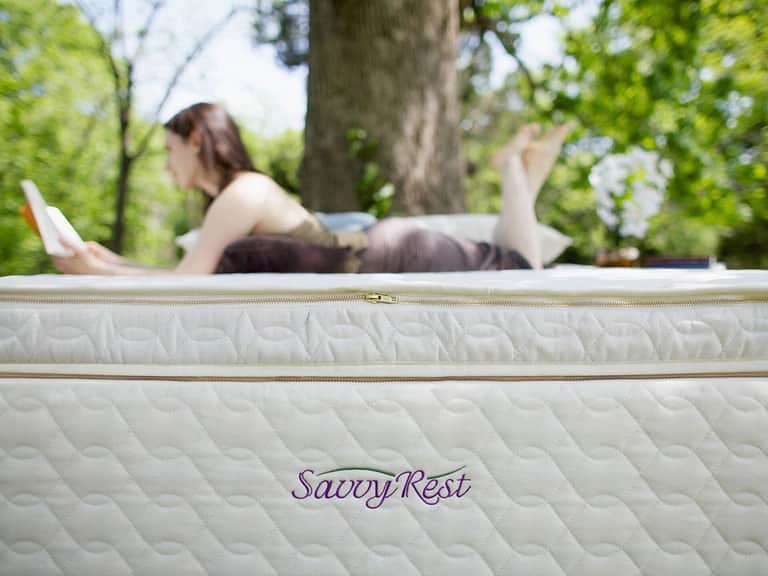
For example, the Savvy Rest Unity Pillowtop Latex Mattress is described as a layered design with certified organic Dunlop latex, a certified organic cotton casing, and wool used as a flame barrier. Its details identify four latex layers, with firmness choices, and describe a separate pillowtop layer. This is an illustration of the kinds of specifics worth comparing—not a substitute for reviewing the current product documentation, available configurations, and terms directly.
People considering latex should also check for relevant sensitivities and review care instructions. A mattress’s construction, encasement, and handling guidance can differ by model. If a material raises health concerns for you, consult an appropriate healthcare professional rather than relying on a general product claim.
Cotton and wool: fibers with different jobs
Cotton is commonly used in mattress covers and quilted layers. It can provide a familiar, breathable textile surface, though its performance depends on the weave, thickness, and what lies beneath it. Look for the fiber percentage and whether the claim applies to the fabric itself or to a larger certified product. “Organic cotton cover” is more specific than an unqualified reference to an organic mattress, but it still describes only the identified component unless documentation says otherwise.
Wool may appear as batting, padding, or part of a fire barrier. It can add a soft layer and help manage moisture within the bedding system. Its presence does not mean the mattress is entirely organic, and “wool” alone does not establish how the fiber was sourced or whether it is certified. Check whether the manufacturer identifies the wool’s role, origin, and any applicable standards.
These fibers can contribute to comfort, but no material automatically guarantees a cool night or a particular feel. Room temperature, humidity, bedding, sleeper physiology, and the full mattress design all play a part. Consider the mattress as a system: a breathable cover cannot fully determine temperature if the layers below it behave differently, and a fiber’s reputation cannot replace testing the mattress for your own comfort.
Certifications: read the scope, not just the seal
Certifications can give shoppers a way to check claims against defined standards. Yet different programs address different questions. Some focus on whether textile fibers are organic and how they are processed; others apply to latex materials, emissions, chemical content, or a finished product. A certification mark is most useful when you can identify the standard, the certified entity, and the exact materials or product covered.
For organic textiles, shoppers may encounter GOTS, the Global Organic Textile Standard. For latex, GOLS—the Global Organic Latex Standard—is another name that may appear in product documentation. Their presence should prompt careful checking of scope: Is a particular fabric or latex component certified, or does the documentation cover a broader product and supply chain? Do not assume that one certificate automatically applies to every layer in the mattress.
Other labels may address emissions or chemical-related criteria without certifying organic agriculture. These claims can still be relevant, but they mean something different. A product that has passed an emissions test is not thereby certified organic, and a natural-material claim does not prove that the finished mattress has met a particular testing program.
When comparing certifications, ask the manufacturer for the certificate or a current directory listing, the certification body, and the product or component name covered. Confirm that the document is current and that the model you are considering matches its scope. If the answer relies only on a logo or general brand statement, request more precise evidence.
- What standard does the certification represent?
- Which component or finished product is certified?
- Does the certificate name the specific mattress model or material?
- Who issued the certification, and can its status be verified?
- Are any layers or components excluded from the claim?
Construction determines how materials work together
Materials are only part of the story. Their arrangement determines how the mattress supports weight, cushions pressure, and responds to movement. A mattress with several latex layers may allow a different balance of firmness and contouring than a one-piece core. A hybrid may combine coils with latex or fiber layers. Even where the same materials appear on a label, the proportions and construction can create a distinctly different feel.
Read the specifications for layer count, thickness, firmness choices, and whether the mattress has separate comfort and support zones. Find out whether the sides can be customized in larger sizes, and whether the layers are enclosed together or can be accessed. A removable cover does not necessarily mean that the cover is machine washable; care directions may call for spot cleaning only.
Firmness is a personal experience, not a universal measure of spinal support. Body shape, weight distribution, sleep position, and preference all affect how a mattress feels. Side sleepers may seek cushioning around the shoulder and hip; back and stomach sleepers may prefer a surface that limits excessive sinking. These are starting points, not rules. The right choice is the one that feels supportive and comfortable for the individual sleeper.
If possible, test a mattress in the position you normally sleep in and give your body time to settle. For online purchases, examine the trial period closely: note its length, any fees, return conditions, and whether exchanges are treated differently from returns. A layer exchange policy may offer useful flexibility, but the details—including time limits and costs—should be confirmed before purchase.
Questions to ask about care, fit, and durability
An organic mattress still needs appropriate support and regular care. Before buying, confirm the foundation requirements, mattress dimensions, total height, weight, and compatibility with an adjustable base if that matters to you. A slatted base may need particular spacing or a rigid insert. Using an incompatible foundation can affect performance and may have implications for the warranty.
Ask how to protect the surface without changing its feel. A breathable protector may help guard against spills and everyday wear, but waterproof layers can alter airflow or the hand of the bed. Follow the mattress maker’s guidance, especially when a warranty specifies care requirements. Avoid assuming that a natural mattress can be cleaned or aired in the same way as every other model.
Warranty language should be read as carefully as certification language. Check the duration, what defects are covered, whether coverage is prorated, and what conditions could void it. A long warranty does not guarantee a particular lifespan or comfort experience. It is a defined agreement about specified defects, not a promise that the mattress will feel unchanged indefinitely.
Finally, consider the mattress’s weight and installation. Layered latex models can be heavy, and setup may involve assembling components at home. Delivery, old-mattress removal, service fees, and return logistics vary. These practical details can matter as much as a material specification when the mattress arrives.
How to evaluate a brand example, including Naturepedic
Naturepedic is one brand consumers may encounter while researching organic mattresses. As with any manufacturer, evaluate each model on its own published specifications rather than assuming that every product in the range uses the same materials, certifications, or construction. A brand-level commitment or general product category is not a replacement for model-specific evidence.
For any Naturepedic mattress—or any other brand—look for a materials list that distinguishes cover fabric, comfort layers, support core, and fire barrier. Then compare the listed certifications with the manufacturer’s documentation. Check whether the certificate applies to the whole model or particular components, and whether the configuration you are purchasing is the one described.
Use the same method across competing mattresses. A side-by-side note can reveal where information is clear and where it is missing:
- Materials: Are percentages, origins, and layer roles stated plainly?
- Certifications: Are the standards and their scope verifiable?
- Comfort: Can you choose or adjust firmness, and how is it described?
- Construction: Are layer thickness, core design, and assembly explained?
- Policies: Are trial, delivery, returns, exchanges, and warranty terms easy to find?
A practical checklist before you decide
Organic mattress shopping can feel like decoding a vocabulary. Keep the decision grounded in specific evidence and ordinary comfort. Before placing an order, make sure you can answer these questions:
- Which parts of the mattress are certified organic, and which are not?
- What are the exact materials in the cover, comfort layers, support core, and fire barrier?
- Can the manufacturer provide current, model-specific certification documentation?
- What firmness options are offered, and can you test or exchange them?
- Does the construction suit your preferred sleeping position and comfort needs?
- What foundation is required, and will it work with your existing bed frame?
- How should the mattress be cleaned, protected, and maintained?
- What are the trial, return, delivery, and warranty terms?
A more informed way to choose
An organic mattress is not defined by one ingredient or a single label. It is a constructed object, and its story is written in the layers: the fibers in the cover, the latex or other cushioning beneath it, the support system, and the materials that hold the whole design together. Certifications can help verify particular claims, but their value depends on understanding exactly what they cover.
Begin with documentation, then turn to feel. Compare latex, cotton, and wool by their role in the mattress rather than by reputation alone. Check how a brand explains its certifications and construction, including model-specific details from manufacturers such as Naturepedic. Finally, weigh those facts against firmness, body support, care, and practical policies.
The clearest product information does not promise that one mattress will suit everyone. It gives you the tools to see what is inside, ask better questions, and choose a sleep surface with confidence.